Is Your Lower Back Discomfort Coming From Somewhere Else?
You finally feel better. A few good days go by. Then you bend down to grab something, or sit through a long meeting, and there it is again. Same spot, same tightness, like it never really left.
This article is about the kind of lower back tightness that develops gradually, without a specific injury behind it. If your pain started with a specific incident, a fall, an accident, a sharp injury during a lift, that's a different situation, and it's worth getting checked out by a doctor before booking bodywork. What follows applies to the more common, slower-building kind of tension most people deal with day to day.
Here's something most people don't expect to hear about that kind of lower back pain: the lower back is often the messenger, not the source.
Your Lower Back Might Be Working Overtime for Someone Else
The lower back sits in a strange spot in the body. It's flexible enough to twist, bend, and rotate, but it's also expected to stabilize everything happening around it. When the muscles meant to share that load, particularly the hips, glutes, and core, aren't pulling their weight, the lower back often steps in to cover the difference.
That's compensation, and it's incredibly common.
A tight hip flexor from sitting all day can quietly shift work onto the low back without you ever feeling tightness in the hip itself. Weak or underused glutes can sometimes contribute to the lower back taking on more of the workload. Even something as simple as standing with your weight shifted to one side, day after day, can train the low back to overcompensate without you noticing.
This is part of why low back pain can feel so confusing. You rest it, you stretch it, and it still doesn't fully let go, because the actual issue isn't only in the spot that hurts.
So Why Does Stretching the Low Back Only Help a Little?
Stretching the lower back directly isn't a bad instinct. It often does provide some relief.
But if the low back is tight because it's compensating for somewhere else, stretching the symptom doesn't change the underlying workload. The low back goes right back to overworking the moment you're back at your desk, back in the car, or back to your normal day.
This is also why some people stretch consistently for months without the tightness ever fully resolving. Often, they're addressing the area that's loudest, not necessarily the area that started the pattern.
What This Looks Like in a Session
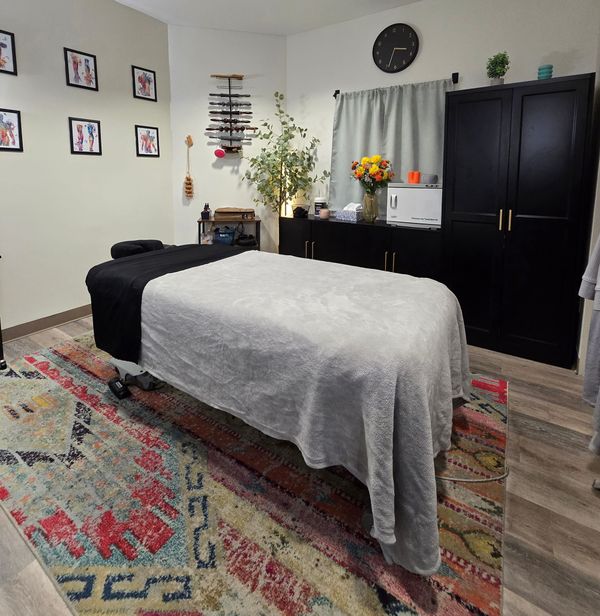
Because lower back tension is so often connected to what's happening elsewhere in the body, a therapeutic session at Muse Bodywork rarely focuses on the low back alone.
A session might include:
- Direct work on the lower back muscles themselves
- Attention to surrounding areas like the hips and glutes when they appear to be part of the pattern
- Assisted stretching, when limited hip mobility seems to be part of the picture
- Techniques like deep tissue work or trigger point therapy, depending on what comes up that day
The conversation at the start of your session matters here more than almost any other area of the body. Knowing whether your low back tightness shows up after sitting, after lifting, or after long stretches on your feet helps shape where the session actually focuses.
Everyone's body responds differently, and we can't promise a specific outcome, but addressing the whole pattern instead of just the sore spot tends to hold up better than chasing relief one tight afternoon at a time.
Patterns Worth Paying Attention To
A few things worth noticing about your own lower back pain:
- Does it show up more after sitting, or more after being on your feet
- Does it ease up with movement, or does movement make it worse
- Do you notice tightness in your hips or glutes too, even if it's milder
- Does it tend to show up on one side more than the other
- Have you stretched consistently without the tightness ever fully going away
None of these have a universal answer, but noticing the pattern is often the first real clue.
Serving Mount Laurel and the Surrounding Area
Muse Bodywork is a private, appointment-only studio in Mount Laurel Township, NJ, serving clients throughout Burlington County and South Jersey, including Cherry Hill, Moorestown, Marlton, Delran, and Hainesport.
If your lower back keeps tightening up no matter what you try, the answer might be somewhere other than your lower back.
This article is for general informational purposes only and is not a substitute for medical advice, diagnosis, or treatment. Massage therapy does not diagnose, treat, or cure medical conditions, and individual experiences vary. If you have a medical condition or persistent pain, please consult your physician.
Muse Bodywork also offers post-operative bodywork, prenatal massage, sports massage, wood therapy, and assisted stretching. Explore all services →