What Happens in a Post-Op Massage Session?
If you've never had a post-op massage before, you might be wondering what actually happens during a session. Do you keep your compression garment on? Will it feel like a regular massage? How much pressure is used?
The short answer: a post-op session is a completely different experience than a traditional massage, because it's designed around a different goal.
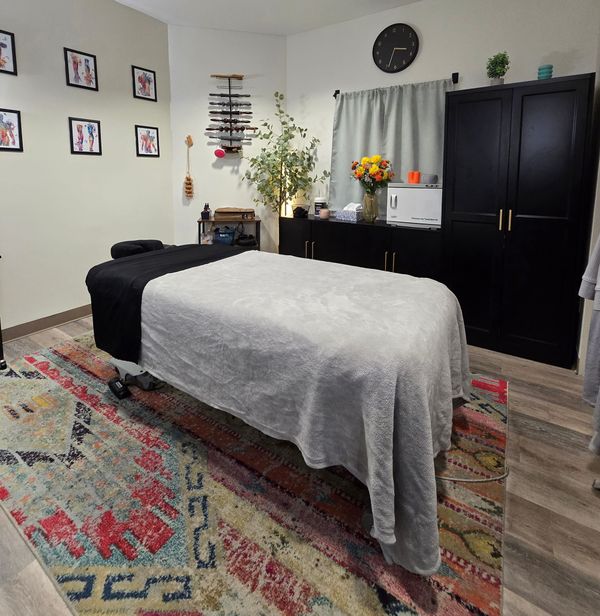
Here's what a post-op session at Muse Bodywork actually looks like, and why it works the way it does.
It Starts With More Than a Conversation About Comfort
A post-op intake covers different ground than a regular massage would, starting before you even walk in. When you book your first appointment, you'll fill out an intake form that asks about your procedure, how many days or weeks out you are, and your surgeon's clearance status. It also covers the practical details: the current state of your incisions, any drains you had, your sleeping position, any pain you're experiencing, any hard or firm spots you've noticed, and your compression garment.
These same topics come back up in conversation at each session, not just the first one. Recovery changes week to week, so checking in on pain, garment fit, and any new firm or sensitive spots stays part of the conversation throughout your care, not something covered once and left behind.
The Pressure Is Light, By Design
Your therapist checks in throughout every session, post-op or otherwise. What's different about post-op work is the baseline pressure itself. It's very light. The goal isn't to work deeply into muscle, it's to support the movement of fluid that's built up beneath the surface during recovery, so the technique looks and feels different from a typical massage, usually slower and more rhythmic than what most people picture.
Many clients are surprised by how gentle post-op bodywork feels. While some areas may be tender depending on your stage of recovery, the goal is never to push through pain.
How light or how much an area can be worked still depends on where you are in the healing process. Areas near incisions, areas that are still swollen, and areas where the tissue feels firm all get approached with that in mind. In most cases, every area can still be addressed, just with appropriately gentle technique for that stage of healing. The exceptions are specific: a fat transfer procedure, an active infection, or another contraindication your surgeon has flagged. In those cases, certain areas may be avoided entirely until you're cleared to include them.
Garments Come On and Off, More Than Once
If you wear a compression garment (faja), expect it to come off for the session and go back on before you leave. Your therapist will guide you through this if you're not sure how to manage it yet, especially in the early weeks when getting in and out of a garment alone can be difficult. You'll be given disposable undergarments to wear during your session.
Some clients need help getting dressed again afterward, and that's a normal part of early recovery, not something to feel awkward about.
You'll Be Asked About Sensation Differently
Check-ins happen throughout every session, but a post-op session asks about more than preference and intensity. The questions get specific: any discomfort, does this feel tender, does this feel numb, does this feel different from the area next to it. Post-surgical tissue can have areas of altered sensation, and your therapist needs that information to work appropriately, not just comfortably.
Speaking up about anything that feels off, even if you're not sure how to describe it, is part of how the session stays safe.
Sessions Tend to Change as You Heal
A session in week one often looks different from a session in week six. As swelling decreases and tissue continues healing, your therapist will adjust technique accordingly. There's no fixed script that applies the same way at every stage of recovery.
This is also why post-op recovery tends to work better as a series of sessions rather than a single visit. Each one builds on what your body has done since the last appointment, and what you do at home in between.
Serving Mount Laurel and the Surrounding Area
Muse Bodywork is a private, appointment-only studio in Mount Laurel Township, NJ, serving clients throughout Burlington County and South Jersey, including Cinnaminson, Moorestown, Marlton, Delran, and Hainesport.
If you're recovering from surgery and not sure what a session would actually involve at your current stage of healing, that's exactly the kind of question worth asking before you book.
Book your post-op session now →
This article is for general informational purposes only and is not a substitute for medical advice, diagnosis, or treatment. Post-operative bodywork is a non-medical service and does not replace your surgeon's care or follow-up instructions.
Muse Bodywork also offers therapeutic massage, prenatal massage, sports massage, wood therapy, and Integrated Stretching. Explore all services →